


Making the right decisions—on the ground and in the air
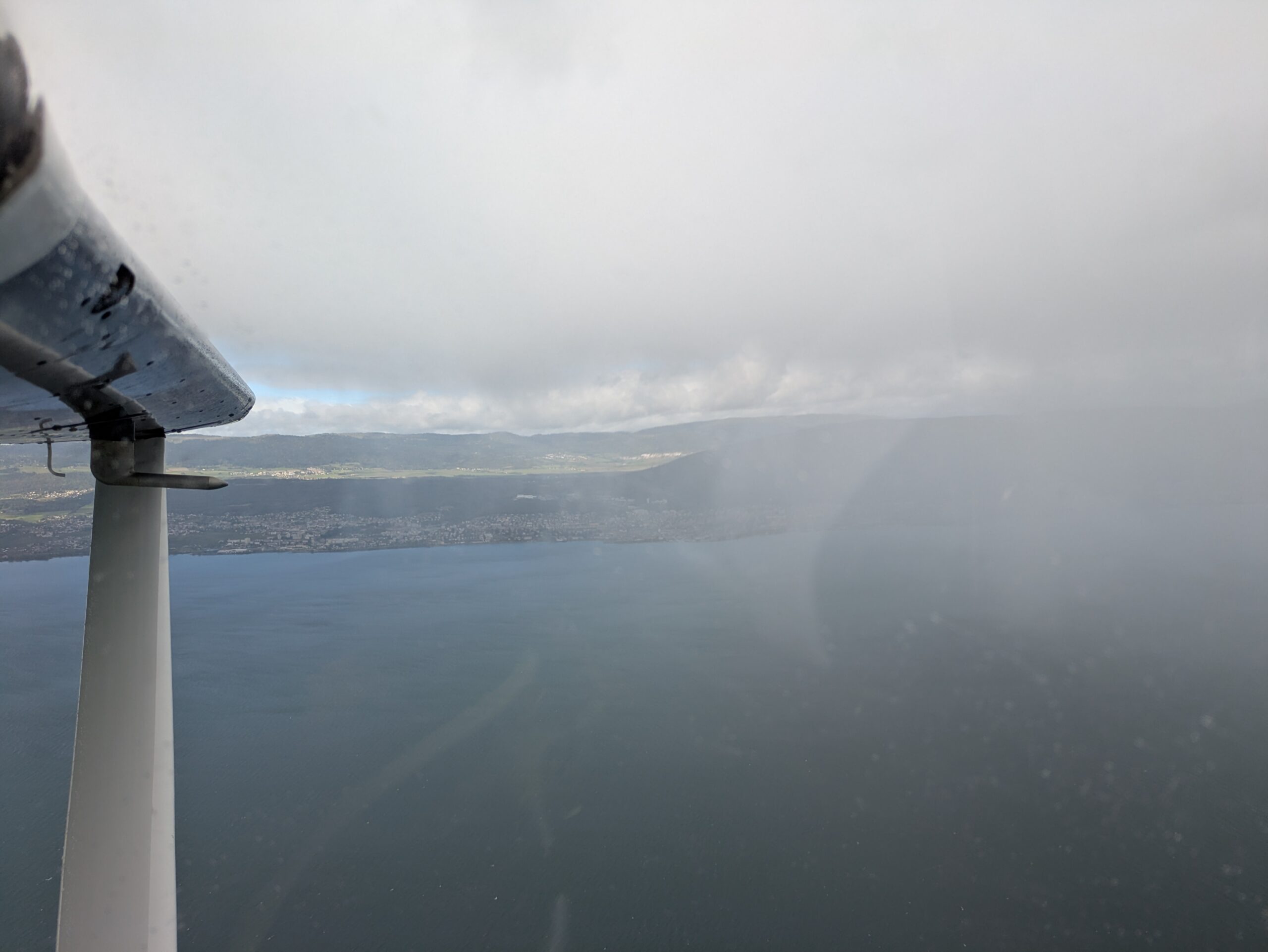
Good decisions begin long before takeoff: Those who consciously identify hazards can realistically assess risks and take timely action. This is the foundation of what is known as Aeronautical Decision Making (ADM). There are proven decision-making tools to support this process. Three practical tools are IMSAFE, PAVE, and DECIDE.
Before the flight: Identifying hazards with PAVE
PAVE is a simple checklist for systematically reviewing typical hazard areas and adjusting the flight if necessary. A pilot can consider these factors during flight planning and review them again on the way to the airfield.
Scenario: A general aviation (GA) pilot is planning a VFR flight from Bern to Innsbruck. The flight has been scheduled for weeks, the hotel is booked, and the passengers are very excited. However, the morning TAF shows: In the area of the main Alpine ridge, lowering cloud bases and occasional showers are forecast for the afternoon.
P – Pilot: The pilot-in-command is a significant risk factor in and of themselves. Here, IMSAFE serves as an honest self-check: Illness, Medication, Stress, Alcohol, Fatigue, Eating/Emotion. Additionally, it’s worth taking a look at one’s own practice: Your currency may be legal, but is your recency really “safe”?
Scenario: The pilot realizes he slept worse than usual. He is still fit to fly, but today is not a day to push the limits. He does not have an instrument rating and rarely flies in marginal visual flight conditions. He already senses that a flight through the Alps today is not a good idea.
A – Aircraft: Is the aircraft suitable for the mission? Performance with reserves for runway length, obstacles, and climb performance; limitations from the AFM; as well as mass and balance. Often, an additional refueling stop or a different route is enough to ensure that operational limits do not have to be pushed to the limit.
Scenario: The aircraft is certified for IFR day and night, without certification for icing conditions; the avionics are very modern and include a digital artificial horizon. Nevertheless, the pilot considers that he would quickly be overwhelmed in a VFR-into-IMC situation, and this is one of the flight’s greatest risks.
V – Environment: Weather, terrain/obstacles, NOTAM/AIC, airspace, and airports (procedures, fuel, operating hours, PPR, customs), as well as the time of night. These considerations lead to measures such as alternate airports, personal minima, or an earlier departure.
Scenario: The pilot wants to determine whether he could maintain the planned minimum altitude in these weather conditions. According to the weather report, it might just be possible, but he cannot find a definitive answer. The weather north of the Alps, on the other hand, is clearly within his flight limits. He could change the destination so that the route remains entirely outside the Alps. In case the weather there is also worse, he identifies several en-route alternates with good infrastructure. This way, he has less to worry about regarding operating hours, customs, or wet grass runways he is unfamiliar with.
E – External Pressures: This factor can override all other warning signs. The perceived pressure to carry out a flight is strongly influenced by schedules and whether one is flying alone, with friends, or with people one doesn’t even know yet. Countermeasure: The PIC can actively influence passengers’ expectations and should be cautious when planning schedules or, for example, making hotel reservations.
Scenario: The pilot feels under significant pressure due to the hotel reservation, the passengers, and the weather conditions in the Alps. When he considers this, he realizes it is time to inform the passengers. He makes it clear: We are not flying to Innsbruck. The “lost” hotel reservation becomes a lesson learned. There is the option to discover another city north of the Alps, or to take the flight at a later time. The decision is made to do the former.
During the flight: DECIDE as a decision-making cycle
In flight, risk management is a cycle: detect changes, assess risks, act, and review the impact. Many models, such as 3P, FORDEC, or DECIDE, essentially describe the same thing. We’ll use DECIDE as an example, with a clear sequence of steps: Detect (search for and identify changes) – Estimate (need for response) – Choose (options) – Identify (specific actions) – Do (implement) – Evaluate (check results). In practice, this can be integrated into cruise checks. Thanks to the PAVE considerations from flight planning, recognizing changes during the flight becomes all the easier.
Scenario: While crossing the national border, the pilot recalls the DECIDE model. He checks the current METAR at the destination airport and the planned alternate, which lies along the flight route. The cloud bases and visibility are better than expected from his briefing. However, the wind is stronger and there is also a crosswind, which he hadn’t anticipated. The alternate from the flight planning also has a similarly poor runway alignment (Detect). If it is already clear before the approach that his personal limit of 12 knots of crosswind component has been exceeded, he will not be able to land (Estimate). Northeast of the destination is a smaller airfield with a paved surface and a much better runway orientation. He now thoroughly evaluates this option but decides to stick with Plan A (Choose). The pilot anticipates which combination of wind direction and speed in ATIS and Windcheck will require diverting to the other airfield and which flight route he will follow (Identify). During the approach, he does this (do), and it remains within his limits (Evaluate). The pilot has consciously identified hazards, assessed risks, and derived measures.
Good Habit
Ideally, this structured approach to decision-making becomes a habit. As pilots, we often fall into tunnel vision or convince ourselves that things will still work out with this weather or on this flight. Especially in a single-pilot cockpit, these tools provide a broader perspective.
Jetzt registrieren!
Um alle Funktionen zu nutzen, erstellen Sie einfach ein neues Konto. Dann können Sie Artikel für später vormerken, Themen abonnieren und regelmäßige Aktualisierungen für Ihre Themen per E-Mail erhalten.